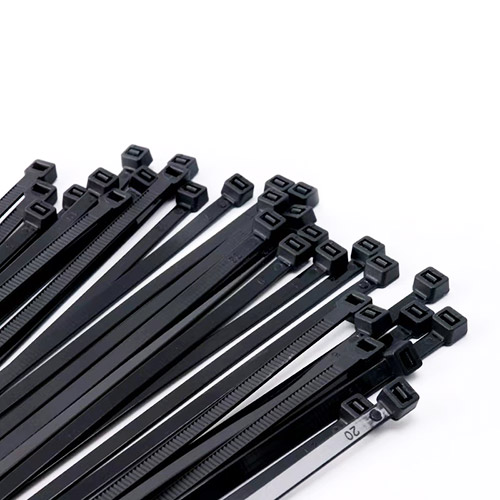
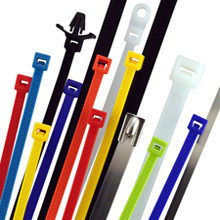
If you are unsure about the quality of the supplier’s cable ties, you can request the supplier to mail you samples for testing at first. If you do not have the corresponding testing equipment. This article teaches you how to test the product without using equipment.
1.Material Testing
Here are two simple methods to distinguish PA6 from PA66:
Method 1: Melting Point Test
If no professional instruments are available, heat the cable tie evenly with a heat gun. Without considering other additives in the cable tie:
PA6 starts to soften and melt at about 210℃;
PA66 requires temperatures above 250℃ to melt significantly.
We can compare their softening speeds to distinguish them.
Method 2: Ignite the middle section of the cable tie with the outer flame of a lighter.
PA6 produces continuous molten drips during combustion, and the drips are easy to ignite;
PA66 produces fewer molten drips, and the drips become harder after cooling.
2.Surface Inspection
Surface Smoothness: The surface should be smooth, without obvious flaws, scratches, bubbles, discoloration and impurities. Cable ties made with recycled materials tend to have small black spots, white impurities.
Color Uniformity: The color of nylon cable ties should be uniform throughout. Obvious color differences (e.g., color spots, color streaks) may indicate uneven mixing of raw materials or improper control of temperature/pressure during production, which can lead to uneven internal structure and affect mechanical performance.
Measuring dimensions: Accurately measure the width, thickness and length of the nylon cable tie, and compare them with the product specifications.
3.Performance Testing
Tensile Strength
Two methods are available.
Manual Test: Fasten the cable tie, then pull both ends firmly with both hands to feel the force can break it.
Tool Test: Fix both ends of the cable tie with a tensile testing device, and gradually increase the force until it breaks to get the exact tensile strength value.
Locking Strength
Locked the cable tie, and then pull it in the reverse direction of insertion. It should not loosen or rebound.
Flexibility
Bend the nylon cable tie moderately and check if it breaks or cracks easily. Poorly flexible cable ties may break after just 1-2 bends.
Fire Resistance
Verify if the cable tie’s fire resistance meets the grade specified in its specifications. Generally, the fire rating ranges from 94V-2 to 94V-0. Test by placing the sample vertically, igniting it twice (10 seconds each time), and then remove the flame:
94V-2: Extinguishes within 30 seconds after each ignition; molten drips are allowed to ignite the dry cotton below.
94V-1: Extinguishes within 30 seconds after each ignition; molten drips are not allowed to ignite the dry cotton below.
94V-0: Extinguishes within 10 seconds after each ignition; molten drips are not allowed to ignite the dry cotton below.
Temperature Resistance
This test is mainly for high-temperature and cold resistant cable ties:
Place the nylon cable tie in a high-temperature environment (70-80℃ oven) or a low-temperature environment (-20 to -30℃ fridge) for about 2-4 hours, then check for performance changes.
At high temperatures: The cable ties should not soften, deform or become brittle.
At low temperatures: It should not become brittle or break.
Aging Resistance
Expose the cable ties to outdoor conditions for 1-3 months, or irradiate it with an ultraviolet (UV) aging chamber for 24 hours, and check for yellowing, brittleness, etc. High-quality aging-resistant nylon cable ties can maintain stable performance during long-term use. For example, cable ties used outdoors, if poor in aging resistance, will age quickly and have a shortened service life.
Corrosion Resistance Test
Cable ties used in chemical plants or humid environments need good corrosion resistance. Immerse the nylon cable tie in specific chemical reagents for a period of time, and observe if its surface shows corrosion, discoloration or dissolution.