Stainless steel cable ties are industrial accessories featuring high strength, corrosion resistance as well as resistance to high and low temperatures, which are widely used in various fields.
1. Types
Standard metal cable ties (self-locking type): No complex tools are required for their installation. They can be quickly installed manually—simply thread the tie through the buckle and pull it tight to complete the fixation, saving installation time effectively.
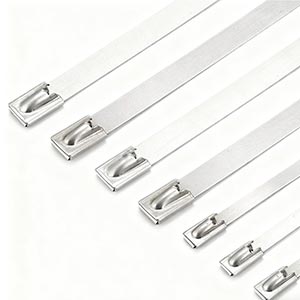
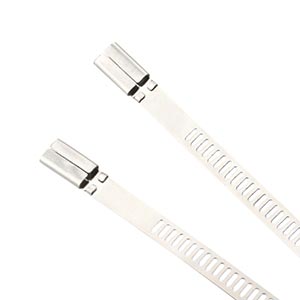
Ladder-hole Metal Cable Ties: The main body of these cable ties is equipped with a series of trapezoidal holes. This design enhances the flexibility of the ties when bent while also improving their tensile strength.
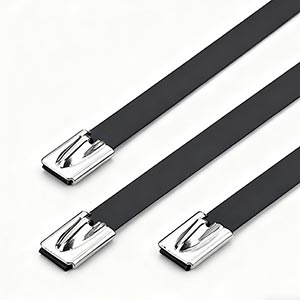
Coated Metal Cable Ties: Their basic structure is similar to that of standard metal cable ties, with a protective and insulating coating applied to the surface.
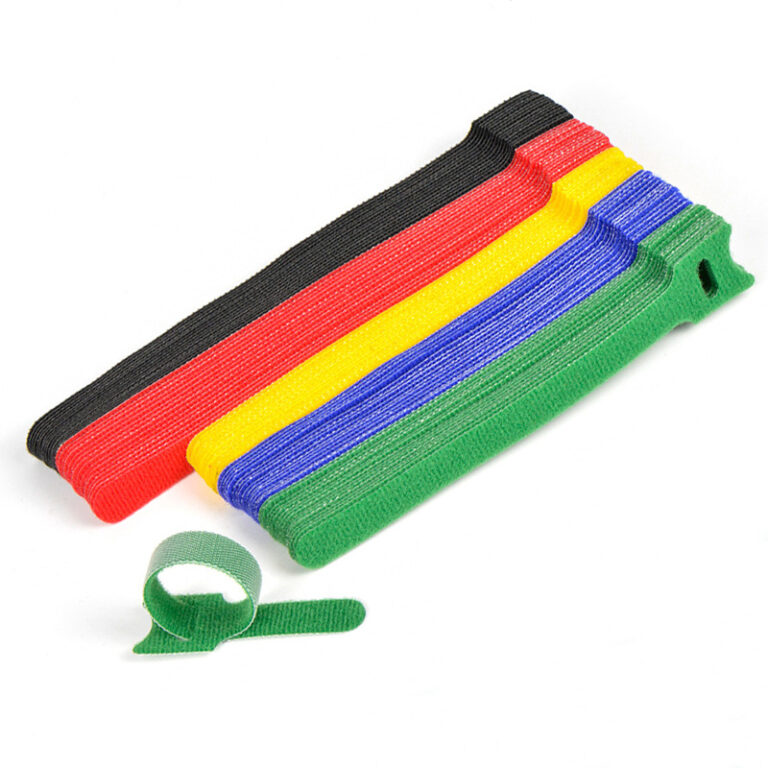
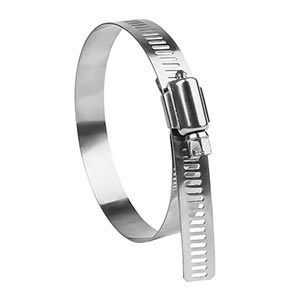
Releasable Metal Cable Ties: These cable ties come with a special locking structure, allowing for easy loosening, re-fastening and repeated use, thus finding extensive applications in various scenarios.
2.Materials
Stainless steel cable ties are typically made of 201, 304, or 316 stainless steel. The cost ranking of these three materials from low to high is 201 < 304 < 316.
201 Stainless Steel : It has a relatively low usage rate. While it boasts relatively high hardness and strength, it suffers from poor toughness and inferior ductility compared to 304 and 316 stainless steel, and is prone to cracks when bent. It is mainly used in dry indoor environments with low corrosion resistance requirements. It is not suitable for outdoor or humid settings, nor for scenarios involving frequent bending or impact.
304 Stainless Steel : It is the most widely used among the three. With favorable toughness, good ductility and moderate strength, it can meet regular requirements for stretching and bending. It also has stable processing performance. It is suitable for applications such as fixing cables in power stations, bundling indoor and outdoor pipelines, and securing accessories of general industrial equipment, balancing cost-effectiveness and practicality.
316 Stainless Steel : It has better toughness than 201 stainless steel and similar strength to 304 stainless steel. Additionally, it offers superior high-temperature resistance, enabling it to maintain stable performance in higher-temperature environments. It is well-suited for harsh working conditions, such as marine engineering, coastal areas, petrochemical sites with chemical media, as well as medical and food processing fields that have strict requirements for corrosion resistance and cleanliness.
More knowledge references of stainless steel:
3.Compare with Nylon Cable Ties
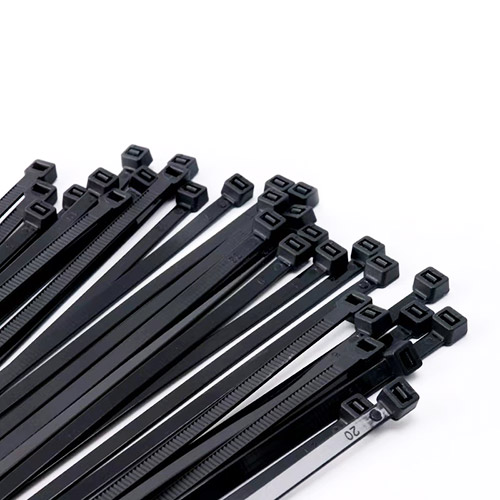
Advantages: Stainless steel cable ties are more flexible and stronger when pulled. They don’t rust, don’t wear out easily, and won’t catch fire. They hardly change shape. Their buckles are much stronger than those of nylon ones. Usually, they can stand temperatures up to about 300°C. Some high-quality ones can even handle over 500°C. They still work well in super cold environments, from -60°C to -80°C.
Disadvantages: They are heavier and relatively more expensive. Operation is less convenient, and they lack insulation properties. Moreover, The hard metal might scratch or damage things when you tie them up.
4.Main Application Fields
Electrical Engineering : They keep cables steady and safe. This stops electrical accidents caused by loose cables.
Mechanical Equipment Installation : They can fix and tie large parts. They also help organize pipes, so messy pipes won’t affect how machines work.Construction Engineering : They’re often used to tie steel bars and secure building materials. Their strong resistance to pulling keeps building structures safe and stable.
Petrochemical Engineering : Stainless steel doesn’t react easily with chemicals. So these cable ties won’t rust when used in this field.